Predicaments and Language Concepts

April 25, 2014
A few weeks ago, in a post https://krymarh.wordpress.com/2014/03/30/assessing-importance-of-things-and-events/ I wrote how we used Robert’s anxious asking for his hat to introduce to him a concept of importance of things. During our trip to North Carolina and back, we had three more occasions to use our predicaments to advance our son’s understanding of language and practice his speech.
For a long time we treated Robert’s obsessive, repetitive questions or statements he kept uttering during our car travels as rather hard to deal with. We tried to ignore them, dismiss them, ignore them, dismiss them… The process left us exhausted and irritated.
Until one day, we finally noticed, that those questions and/or statements gave us an opportunity to involve Robert in a dialogue.
If Robert didn’t have a problem, he didn’t bother to talk. When, however, Robert was in quandary, he tried alert us to it and demanded solution. Hence, he talked.
The fact that he started by repeating the same word or phrase may times, was not important. After all, his words gave us an opening, and to some degree we could expand the dialogue, enticing Robert to continue with another word or phrase.
1. When we picked up Robert on Saturday after the program, he had his backpack with him. It was Robert’s experience that backpack was always first returned home. Only after returning the backpack, the family could drive to New York. Robert kept repeating, “Home, home.” and “Bag, bag.”
It took us a while to understand the connection between “Home” and “Bag” . When we did, we could shape a dialogue, first feeding Robert with appropriate responses. “We bring backpack home when we return from North Carolina” – This is a sentence that explained what would happen, but it was too long for Robert to repeat. we had to think about simpler alternatives. For instance:
“Bag, bag”
“What about Bag?”
“Home.”
“Yes, we will bring backpack home after the trip”
“Bag”
What about bag?”
“Home”
“when we bring backpack home? ”
“After the trip”
Robert practiced this and similar language structures throughout most of our drive to New York City.
Our attitudes toward Robert’s obsessive asking changed dramatically, as now, we considered it a great opportunity for therapy and felt great that Robert participated willingly.
2.On a way from New York City to Durham, Robert was bothered by the fact that we left his pillow and comforter in his grandmother’s apartment. He believed we should take it with us to a hotel. That resulted in another a few hours long language therapy session. It started with Robert repeating just one word, “bed” while he had in mind pillow and comforter. (bed is much easier to say).
“Bed, bed, bed.”
Do you mean, ‘bed or pillow”?”
“pillow”
Where is the pillow?”
“In New York”.
“where is the blanket? ”
“In New York”
“Yes, In grandma place. Pillow and blanket are in grandma’s place.
so, Where is your pillow?”
“In grandma house.”
We repeated this and similar dialogue that included a few calming sentences about picking pillow and blanket on our way back.
Every time Robert asked, we built it into a dialogue. By the time we passed Baltimore, Robert had enough, and asked for his IPAD.
3.Another quandary presented itself on a way from New York City to Boston. Since this time we were driving with Robert’s grandmother, at first we tried to spare her from listening to our boring dialogues. So we tried to ignore, to dismiss, to ignore, to dismiss Robert’s efforts to deal with his problem.
Finally, we gave up.
“Grandma, grandma.”
“What about grandma?
“New York”
“Yes, grandma lives in New York. Today she goes to Norwood with us.
“Grandma, grandma.”
“What about grandma?”
“Norwood”
Yes, she comes to Norwood with us.
“Grandma, Grandma”
“where does she live?”
“New York”.
“start with she, and tell me again.”
“she lives in New York.”
Where does she go now? ”
“Norwood”.

Quandary solved.
Five Hours in the Capital

We arrived 15 minutes before 10 AM. The National Cathedral was still closed, so Robert, Jan, and I walked around it looking at the plants surrounding it and at its tall walls. Maybe because it was Good Friday, the entrance was free. As we kept approaching the altar, we heard singing. Beautiful voices, beautiful music. The Boys Choir had its rehearsal. Robert sat next to us and listened. When I finally got up, he reluctantly followed me.
We stopped at the Lincoln Memorial, walked toward beautiful World War 2 Memorial and farther toward Washington Monument. We didn’t reach it. It was a cold morning, and we had a few other places to visit. Besides, the tall obelisk presented itself most magnificently from the distance.
We took pictures in front of the White House fence, drove past Supreme Court, walked toward Capitol, but didn’t enter it.
We didn’t make any arrangements to visit our senators or representatives. We will do that after Robert and I read a few easy (2, 3 grade level) books on branches of government. When we come again, Robert will recognize all these places as relatively familiar. The mixture of known and unknown will help Robert to make the next step. But, since Robert didn’t read any of those books yet, and by now probably has forgotten appropriate chapters from his Social Studies workbook, there is no point of planing next visit to Washington DC yet.
On a way back to Interstate 95 North, we got lost a few times. Robert didn’t mind. He kept quiet. By 3PM he certainly had to be hungry, but he didn’t mention french fries or any restaurant’s name until Baltimore.
Was he thinking about what he saw? What impact the structures and crowds had on him? I don’t know. After all Robert never explains himself.

Four Days in North Carolina

April 23, 2014
Every morning we drove Jan, Robert’s dad, to work and every evening we picked him up. That was the frame of ours days there. The time in between we spent doing other things, with very little planning. Twice, we went to Sarah’s Duke Garden. Not much teaching there. We walked around a pond in Japanese section watching turtles, ducks, and a female black necked swan. We rested on the benches under crab apples and did nothing. One might call it relaxing, but Doing Nothing sounds much more appropriate. Priceless.
We walked and got lost in the Native Plant section. We found an educational, vegetable garden and amazing White Garden filled with white blossoms watching us from flowers, shrubs, and trees.
Twice we went to The Life Sciences Museum. We went around lunch time, when many groups of school children were aiming at cafeteria for lunch, so it was relatively quiet and most of the stations were approachable. We compared the capacities of different conics by filling them with gray “rice’ and pouring it from one solid to another. I don’t remember what else we did, except that we moved from one section to another trying this or that. we visited insects’ exhibits, watching different camouflages the strange insects used to stay undistinguishable from twigs and leaves. We let butterflies sit on our heads or shoulders. We walked through dinosaurs’ trail, wild animals section and wind section of the outdoors exhibits.
One rainy day wee went to see, Rio 2. Unfortunately, we had to wait very long before the movie started. Not just previews but also a short film, and theatre own never-ending advertisements delayed the presentation of the feature. By the time Rio 2 began, Robert was ready to go home. But he survived. Three times, however, he loudly called for his father. But when asked, if he wanted to leave, he said, “No”, so we stayed until the end.
The highlight of Robert’s stay in Durham was doing laundry in the hotel. It seemed that this was the activity he enjoyed most. Walking through hallways, applying a box of detergent, paying with coins, and setting washer and dryer cycles allowed him to continue with his home responsibilities in a new setting. By applying his old skills in a new situation, Robert was able not only to adjust to a new space but also to feel in control of it. In a way, he retrieved his compass.
we didn’t have to pay admission to the Life Sciences Museum as our membership in Boston Museum of science gave us free access.

Against the Grain to North Carolina

April 22, 2014

Years ago, when Robert was 4 or 5 years old, he gave us, his parents and his grandmother, very hard time on a way to White Mountains in New Hampshire. He was kicking, screaming, and moving back and forth in his car seat trying to get out. Despite all these behaviors, Robert’s grandmother stated that we should stop and eat in the first restaurant we find. I was petrified. How could we go into any public place with this untamed tiny creature with loud, piercing voice and explosive energy in his little feet? The only thing to do was to go back. Go back. Go home. Hide. I protested. Well, mildly protested. And since everybody was hungry, including Robert, we went to Applebee’s anyway. To my surprise and relief, Robert behaved much better than he did in the car. Maybe he still whined, but I am not sure even of that. He certainly did not kick and he did not try to run away. He ate his food and let us eat ours. Even more, after the stop in the restaurant, he became calmer so the remaining part of the trip was much nicer. That lesson was not lost on me.
From that time on, I often went against that first impulse to return to safe cave and abandon all thoughts of venturing out.

In one of the old posts, https://krymarh.wordpress.com/2012/07/11/all-the-bubbles-in-the-world/, I wrote about going back to the store almost immediately after Robert had a major tantrum there (1997). Of course, my husband and I planned carefully a few subsequent trips to the stores. But after a few days, we were rewarded by years of pleasant shopping experiences with Robert.
In 2004, I was advised by the clinical supervisor (BCBA as she would be called today.) to consider residential placement, as a better way to address Robert’s behavior. Moreover, I was asked to consent to the next level of restrain which I understood as a sort of solitary confinement in a very small room. I have not consented. Instead, I began looking for less restrictive program. Not without a fear. I was scared of Robert leaving a place where he stayed for more than 8 years, where everybody seemed to know him. where I knew everybody. Where I knew what to expect. But then, the path that school had for Robert became narrower and narrower. I had to find a different road.
I did. Robert joined the Collaborative program that offered more possibilities, although some were thorny and in the end led to a dead end. Still, at home Robert’s behavior improved a lot. In the beginning it also improved at school. Moreover, Robert gained many skills in a very short time. The second year, however, was a different story. But that second year was completely different program. Different place, different students, different teacher’s aides, different way of presenting instruction. Only the teacher was the same. Without the supportive guidance of the previous, very experienced staff, Robert lost his compass. Robert left this school with a terrible profile written with cowardly menace. For instance, during the whole school year, Robert had three tantrums, but the profile stated that he had three tantrums EVERY WEEK. The image of Robert created by this profile is still alive and affecting Robert’s future. Based on this profile, I was, yet again, pushed toward placing Robert in the most restrictive programs. I rejected those advises. Instead, Robert ended in my town’s high school in self-contained classroom. He had three relatively good years there. In the school year 2009/2010, with the arrival of a new teacher and a new sped director the chasm opened yet again, and Robert seemed to regress with the speed of light.
It has to be said that going against the grain is not full proof and not easy. Those are not happily ever after stories. There are constant struggles. There are doubts.
But, at least in Robert’s case, those hard decisions made against almost everybody who could claim some knowledge of Robert, were necessary to foster Robert’s growth.
That is why we drove to Durham, NC, that Saturday, on April 12, just after Robert’s major meltdown. We took this trip despite the fact that Robert’s behavior deteriorated the previous week. Without consistent daily schedules (he is still without a day program), without responsibilities to fulfill, without events to predict for the next day, without meeting other people, Robert is regressing.
I expected such development and tried to prevent it, but on Thursday, April 10. as I reported in https://krymarh.wordpress.com/2014/04/11/journal-page-10/ Robert became very anxious asking for his father every minute. On Friday he was just very tense and on Saturday, Robert had a meltdown. As he does every Saturday, Robert attended 4 hours long program and at least for an hour and a half, he was making noises and slapping his own face. It resembled the nightmarish events from his last year at local high school (2009/2010). I was heart-broken. In a short time, everything he worked so hard on for years, evaporated. And again, my first reaction was to cancel the trip and return home. Go back. Go back. Go home. Hide.
I knew that Robert was responding with constantly growing anxiety to the reduced predictability of his new situation. I couldn’t help him. I was unable to find him a day program, and I wasn’t able to replace all the missing elements of his school life with new arrangements. Robert looked as if he were drifting into chaos without flashlight or compass. The trip to Durham, at first glance, appeared to be the continuation of that chaos. But that chaos was a part of a travel routines: driving, staying in hotels, visiting places, meeting people.
That is why, on that Saturday, April 12, we did not bring Robert home but instead we took Interstate 95. South.

Journal, Page 10

April 11, 2014
Two rather difficult days.
Yesterday, Robert and I studied together for two hours. It was rather uneventful. Simply the extension of previous materials.
Robert work on pronunciation of “..ill” with the help from Speak It on his IPAD. He repeated the vocabulary worksheets from three days ago. A couple years ago, I noticed that if we repeat the same pages day after day, Robert doesn’t retain any more words that if we repeat them month later. So now, I am trying to go in cycles of three days. Each of three days we work on different set of words, and then we repeat the cycle.
In Saxon Math, Robert is counting the values of expressions. We returned to finding coordinates of the points in the Cartesian system. Two years ago, Robert didn’t make errors, but after such a long break he makes some mistakes.
Robert also completed today the last project – cutting, bending, and assembling angelfish from Kumon Amazing Crafts. He did it all by himself, without even once calling me to help him. Around 12:30, we drove to Stony Brook in Norfolk. Brisk walk along the trail. A few short stops to observe a swan chasing away Canadian geese and ducks from two wide ponds. As we observed, I described in two simple sentences what we were seeing. I wanted Robert to tell me that later.
In a car, we practiced ordering Mighty Kids chicken finger. Robert kept repeating after me but in the restaurant he asked for “Number 15”. To my surprise, he was understood!!! Moreover, the employee kept asking Robert all the questions without even looking at me. When she didn’t understand what sauce Robert wanted, she gave him a choice, “Barbecue or Sweet and Sour?”
“Sweet and sour,” he said and she understood. What a relief! As we sat at the table, I tried to talk about what we had seen at the park. Robert said, “Swan, geese”. Better than nothing, but…

When we returned home, for reason I cannot understand, Robert started asking about his dad and his hat every half a minute. ( He had similar behavior two weeks ago.) Still, he joined me to work on the Mesopotamian Pocket from Ancient History Pockets. He colored the pictures, completed a vocabulary page with the definitions and illustrations of four new words. He cut out the Tigris river on the map and put two boats on the sticks to demonstrate how sailboats traveled to and from Persian Gulf. He made a post card with a picture from Babylon’s Hanging Gardens and a card with a Ziggurat. He read a text about Mesopotamia and made a cover for the pocket. He colored and cut out two Macedonians puppets. It took more than two hours to finish, but Robert was rather engrossed by this activity. But not engrossed enough to forget about his dad and dad’s hat. So every few minutes he asked again, “Dad, dad” or “Hat, hat”.
As long as he kept working I didn’t pay much attention to this obsessive asking. But when the project was completed and I began cooking, Robert’s continuous asking drained me completely. I couldn’t come with a good strategy to stop or even reduce this behavior. Maybe because I was exhausted already, I just didn’t know what to do.
Had Robert been asking only about dad, I would use old strategy:
“Dad, dad, dad.”
“What did you say? ” I would repeat the same question until Robert stops repeating the same word few times.
“Dad.”
“What about dad?”
“At work.”
“Yes he is working. He is coming home at six.”
Such dialogue, always calmed Robert’s anxiety… for a while.
But this time Robert asked for a hat, and I couldn’t understand what was the nature of the problem with the hat so I couldn’t come with any calming response.

Today, Robert and I had a difficult day also, but for different reasons. We went to see a new center. Robert was extremely tense, and so was I. He relaxed during horseback riding lesson. For the first time, he lead the horse by himself OUTSIDE the arena. At 1 PM we went to the car mechanic to change tires. Given Robert’s prior experiences involving cars, car keys, dealer, and car mechanics this visit could be considered a sign of progress. Still, waiting is as hard for him as it is for me.

Facts. Simple and Convoluted

April 9, 2014
This morning, at my son’s pediatrician office (Yes, he is already 22 years old but he still sees pediatrician, who knows him well.), I glanced at April issue of Parenting Magazine. I didn’t really expect to find anything but lukewarm advice to young mothers of even younger children. Then, a page listing seven or eight things parents should never tell their children caught my attention. The first advice I read was not to tell, “Good job!” to prize the child for doing something correctly. This seemed to go against strong beliefs in encouraging a child by providing constant feedback. And yet, this was exactly what I had been dealing with for the last two years. I wrote a couple of blogs about Robert trying to read my lips to get cues from me and not from what he knows. He stopped believing in his own knowledge. I wrote about it in Pulling out of Helplessness https://krymarh.wordpress.com/2012/05/08/pulling-out-of-helplessness/
Just a few weeks ago I noticed that Robert made more errors working with equivalent fractions when I was sitting next to him but refrained myself from any gesture or sound that would confirm to him, that he was correct. Lack of acknowledgment of his correctness confused him a lot. He did better when I was not next to him, and thus he only relied on himself. https://krymarh.wordpress.com/2014/03/14/journal-page-2/
Parenting Magazine in one sentence nailed the problem. Robert spent years in ABA therapy during which he heard, “Good Job” thousand times. Later, he went through years of one to one assistance (including mine) and learned to be guided by approving gestures and sounds. As he became painfully attuned to other people’s reactions to his answers, he stopped relying on what HE KNEW.
I don’t know how many people would treat Parenting Magazine seriously, or at least as seriously as New York Times which day or two ago came out with the blog titled, Inside the Mind of a Child with Autism I skipped through it not finding anything that would relate to my son’s learning. They were a few familiar terms and a few known names, but the article left me completely alienated. It was long enough to be informative and maybe it was to uninterested parties. Nothing in it related to my current knowledge of Robert and nothing in it addressed any of the thousand questions I still have.

Journal Page 9

April 7, 2014
The teachers’ supply store in my town, Learning Wellis closing by the end of the month. On Saturday, I bought many workbooks at greatly discounted prices. Today, we started again History Packets, Ancient Civilization Five or more years ago, we had done the same thing completing all the packets. But it was only the first encounter. Since then nobody has bothered to teach Robert History as it was considered one of the subjects useless for him. Today, Robert colored the cover page with pictures representing six cultures from Mesopotamia to Aztec. He searched for similar pictures on his IPad and copied the colors.
Since the books were so inexpensive, I bought many including those that would seem much below or much above Robert’s level. I noticed, however, that sometimes the very easy workbooks introduce difficult concepts in a way that could be easily digested. For instance, in the workbook Daily 6-Trait Writing on one of the first pages I found the word, “Topic”. I have never used that word with Robert, because I wouldn’t know how to explain it to him. This book did that in a very basic ways. I also bought three levels of Word Family. Although it was written with the spelling in mind, I want to use it mainly to practice pronunciation. Robert knows much better how to write those words than how to say them. We used Speak It Apps on the IPAD. Robert printed all the words from “ack” family, put period after each one and then listened and repeated them a few times. I hope that would help him. I also bought 4th grade Grammar. Two years ago we completed the 3rd grade, and a couple of years before that 2nd grade. They are very similar as the level of difficulties increases slowly.
We also practiced concepts by using Assessments from Language for Learners. Using the whole book, page by page, doesn’t make much sense at this time. Robert has many skills already, although they are often hidden. The assessments are perfect for finding those basic gaps and repairing them. Doing lesson after lesson could back fire at this point.
Later, Robert waited for Pam. She was a little later than he expected her, but Robert waited for her patiently outside while I raked leaves, the wind carried across the street over winter months. Luckily, he didn’t have to wait too long.

After a Month

A month has passed since Robert graduated from school. Although we study every day and go out at least once a day, I am not sure how much Robert learned during that time and to what degree his world expanded. We mostly continued with the same activities Robert did before he finished the school. At home, he cooked his chicken a few times, but since he kept leaving the kitchen with the chicken on the stove, he still needed close monitoring. No independence yet.
For the fist time, he baked brownies using mixture from the package. Still, I assisted him every step of the way, even if only to remind him to read the directions. No Independence.
We went to movies a few times. I have chosen theaters he had not visited before. More importantly, I consequently kept taking him for PG 13 movies. Small progress
there, as the number of trips to the bathroom during the movie was on the average… zero.
We went to the Zoo, but nothing new there.
The new addition to the daily routine were (almost) daily exercises aimed at the gross motor coordination. Some improvement in endurance and in attitude.
I noticed some progress in Robert handling self register at the grocery store. He was very skillful in passing bar code in front of the scanner and he became more skillful in entering the code from those produce items he had to weigh. He is still not sure of his new pin on his ATM card and needs help there.
As for our study together, I hardly see the progress in reading comprehension. Although, he is better in answering the Who, Where, and When questions as they relate to the setting of the story we read, I still don’t think he is able to retell the story after we complete the story map. This is mainly my fault as I did not emphasized that skill at this time.
There is an improvement in Robert building or copying 3D structures, but to be sure, I should monitor this skill better. It is still hard for Robert to decide how many faces, edges, and vertices different solids have just by looking at their drawings. When presented with a model he answers correctly most of the time.
Reading parts of the Amelia Bedelia book was a new challenge for him and me. I said “part” as I zeroed on some topics trying to explain to Robert some of the misunderstandings, Amelia had. I was happy when Robert laughed when he read about Amelia Bedelia cutting flowers, but he wasn’t exactly sure what was wrong with the direction Prune the hedge
I had to get out of my comfort zone and explore other things,to take Robert into community. I called the library asking if Robert and I could come one morning a week and put some of the returned books on the shelves. Someone should get back to me, but nobody did. We also visited today our town’s food pantry with two bags of imperishable food. I asked if we could come and volunteer
on one of the two mornings. That was not an options. The place had too many volunteers already.
That brings me to the idea I have been playing with for quite a while, but didn’t do much about it yet. Writing together a book about…meaning of life.
About our place, roles, responsibilities…
I do think that people with developmental disabilities need such book. They long for understanding of their place i the world even more than people who consider themselves fully in charge of their lives.

Counting Invisible Blocks

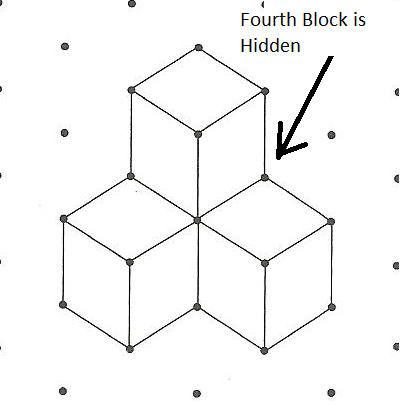
hidden_blockMarch 2, 2014
One of the first skills introduced to Robert when he was 3 or 4 was block imitation. Robert should copy the presented 3D model. I don’t remember the maximum number of blocks Robert was supposed to use. I don’t remember how well or bad he was doing. I don’t think he had ever progressed from imitating 3D models to making a structures based on 2D pictures. That was done at his private school. At home, Robert played often with Lego and built structures based on sequences of pictures. I always assisted him more or less. And of course, he usually built everything only once, so there was never any opportunity to reach mastery and being completely independent.

For the last few days, Robert was counting volumes of different 3D shapes based on their pictures in the workbook from Singapore Math, grade 3. He counted all the blocks except those he couldn’t see, as they were behind or under other blocks. I asked him to build those structures. He began but soon became confused. He saw the block in the second layer, but didn’t see the block that should be underneath it. Robert’s hand held the block in the air. That was the right position according to the picture, except it was impossible to leave the block there without the support of another block that was NOT visible in the picture.
Robert’s hesitation was priceless. The discord between the picture and the reality forced him to doubt himself.

In the last few days, he mostly build rectangular prisms. He could easily assemble them, layer by layer, based on the drawing. Although he made them without difficulties, he still had trouble finding their volumes based only on the pictures.
His first response, when presented with the drawing of the solid, was to count what he saw in the picture and not using his mind to count the invisible cubes.
Many times, after he erected the prism, I separated all the layers taking them down one by one, and then I restock them hoping Robert would remember those invisible blocks covered by the subsequent layers. Robert seemed to find the proper value of volume.
Unfortunately,with the next rectangular prism, he proceeded in the same manner, making all the same errors. He looked at the picture not to make a mental model in his mind, but to count the blocks on the visible surfaces. He was able, however, to build the rectangular prisms based on their pictures, and then count their volumes.
Today, he had difficulties with constructing more complicated models. That is why he held the block in the air and felt that something was amiss. This moment of hesitation was much more important factor in understanding the importance of invisible blocks, than the automatic recreation of the rectangular prisms.
The few seconds during which Robert’s hand hung over the space where something should be but wasn’t, provided priceless opportunity for an analytical insight. The confusion Robert felt could be the first step to recognizing the problem, and thus thinking…
I regret that I didn’t realize how important the block imitation could be, much earlier. In ABA format block imitation became rather mechanical and boring task. It was repeated over and over until given model has been replicated with 80% accuracy. There are of course good reason for that – working on attending skills could be one of them. What I haven’t realized then was that copying even simple picture might have helped Robert to replace his reliance on what is visible in the drawing to what makes sense in his mind. That the mind can fill the gap left by imperfect images.

Bacon, HIs and Mine

This post was a part of another one I wrote on March 31. After close reading, I decided, that it should stand on its own as this is a separate and important topic. Moreover, today, on April 2nd, another trip to the supermarket brought a nice, calm solution to the described problem.

Just before the lunch, we went to Stop and Shop to buy Robert’s favorite Tyson chicken. At the beginning, everything went very well, as it always goes. Robert tried to buy his favorite Thai Chips, but I gave him a choice of chips or chicken. He put chips away and found Hot and Spicy Tyson Chicken instead.
But then, I chose two packages of Farmland bacon, because they were on sale: two for 4.99. Robert removed them from the shopping cart and put two packages of Oscar Mayer instead. He must have been convinced that I made a mistake and he attempted to correct it. After all I always buy Oscar Mayer. When I tried to explain to Robert why this time I wanted to buy Farmland, he didn’t accept my explanation about higher and lower prices. I don’t blame him. Rarely during our shopping, I asked him to choose cheaper item. I don’t think Robert understands that concept yet. Anyway, when I asked Robert to switch back, he became agitated, protesting rather loud. I stood my ground and told him that since we disagreed, we would not buy any bacon that day. Although unhappy, Robert put Oscar Mayer bacon back. Of course, I could easily predict that this would happen and plan for this situation. But life does not always let us prepare for the unexpected thus managing one’s reaction to such event is a true challenge.
The entire “discussion” lasted maybe half a minute but it was a loud exchange and I considered it a setback. Because, I was loud too. Being stern and using a full voice served two purposes. For once, if I whispered, it would give Robert the wrong impression of my weakness caused by the embarrassment. Secondly, I did not want anybody, who witnessed this exchange to consider me the victim of someone out of control. The image of people with autism being out of control has been already installed with too many bystanders. Robert is not out of control, even though his behavior was problematic.
Despite the appearance, I was pretty shaken, as this was the first problem in the grocery store since 2006. In eight years of going to the store, we didn’t have any problems. Robert could find anything and was never insistent on buying something I told him not to, because we had it at home or because it was not good for him (like cheese in a can).
While, I understood that the reason Robert wanted to switch one Farmland bacon for Oscar Mayer’s, I didn’t anticipated such a strong reaction. Was it because he is much more stressed by staying home and resulting from that his sleepless night?
Yes, I appreciate the fact that Robert has been so wonderful in stores in the past. I appreciate that he agreed to leave Oscar Mayer bacon in the store and leave the issue unresolved until later. I appreciate the fact that the rest of our shopping trip went smoothly as Robert demonstrated much more independence using self register – scanning the items and even entering the codes for tomatoes and apples.
I appreciate all of that, but I still worry.
Robert does too. He hates confrontations. He is exhausted and slightly depressed after they happened. Yesterday, he was sad too. Luckily, he had his last cooking class in the session. He was among his peers. He was busy. He was happy.
Update
Today, April 2nd, after a morning session of learning, Robert and I drove to the Stop and Shop Supermarket. Before we left, I asked Robert, ” Could we buy one Oscar Mayer bacon for you and one Farmland bacon for me?”
“OK”, he said.
Still, I wasn’t sure. But at the store, he chose one his, and I chose one mine kind of bacon. It was that simple.